
Organizations are increasingly turning to the best wellness platforms for employers as employee expectations around health, flexibility, and support continue to evolve.
Wellness is no longer just an added benefit. It plays a central role in improving engagement, retention, and overall performance.
Modern platforms go beyond basic programs, offering personalization, incentives, and data-driven insights that help drive long-term participation.
As a result, employers are investing in structured programs that connect health outcomes with business results.
Top Platforms for Managing Employee Wellness
Employee wellness programs often fall short not because of limited resources, but because engagement fades over time. Many tools struggle to maintain participation beyond the initial rollout.
This has led employers to prioritize platforms that sustain interest through incentives, personalization, and continuous interaction, rather than one-time initiatives.
Flexibility has also become essential. Organizations need solutions that can support diverse employee groups without constant reconfiguration.
At the same time, data plays a larger role, helping companies understand what actually drives participation and long-term outcomes.
The platforms below reflect the most effective solutions for addressing these challenges and supporting sustainable wellness strategies.
#1
PDHI
Enterprise wellness platform focused on identifying health risks, engaging members, and rewarding healthy behavior.
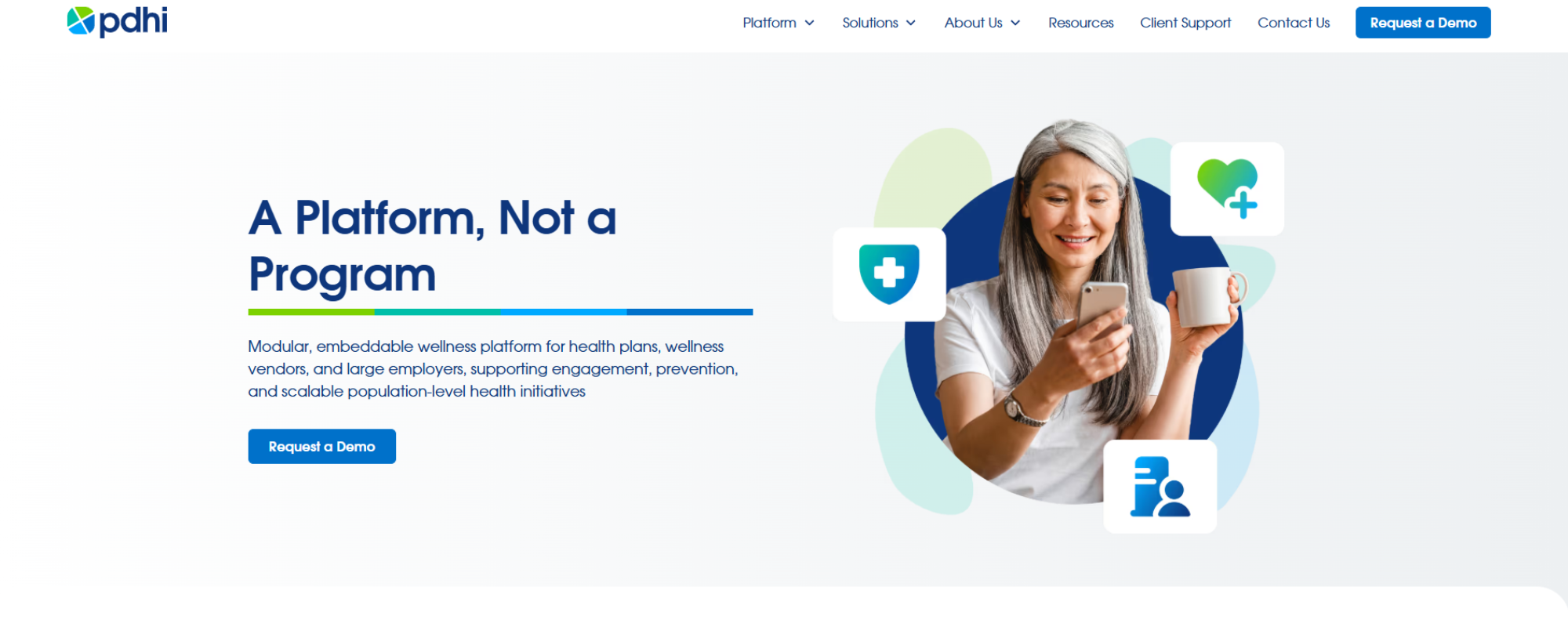
PDHI delivers a comprehensive approach to employee wellness through highly configurable programs and multi-channel engagement.
Instead of relying on fixed solutions, it allows organizations to design initiatives tailored to different populations and specific goals.
With over 28 years of experience, the platform has evolved to support large-scale programs across complex and diverse workforces.
It brings together incentives, data tracking, and integrations to create a unified environment for managing participation and results.
Analytics play a central role, giving employers clearer visibility into engagement patterns and program performance.
This makes it a strong option for organizations seeking scalable strategies with measurable impact.
#2
Wellable
Holistic wellness platform centered on engagement, challenges, and employee participation.
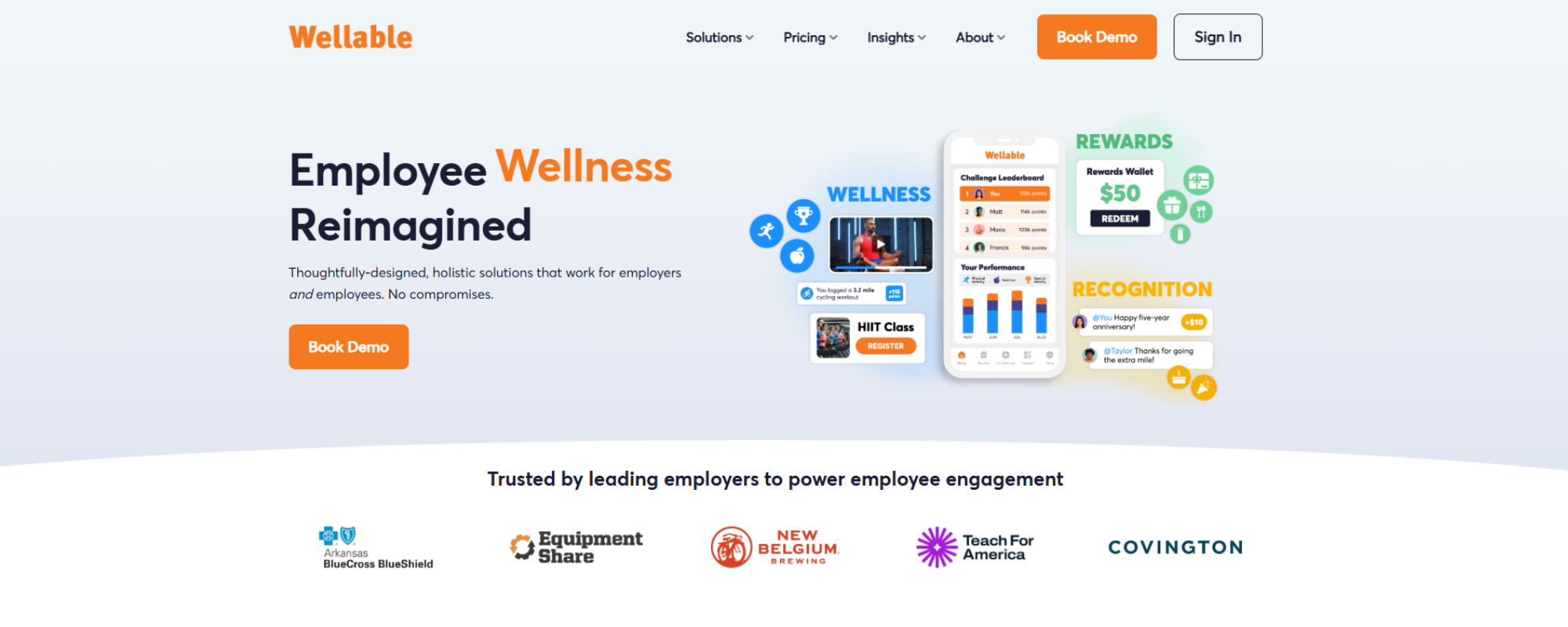
Wellable is designed to keep employees involved through continuous interaction and participation-driven experiences.
Rather than static programs, it focuses on dynamic environments that combine activities, communication, and integrations in one place.
Gamification supports this approach, using challenges and rewards to encourage consistent engagement across teams.
The platform also offers visibility into participation trends, helping organizations better understand how employees engage with initiatives over time.
It works well for companies aiming to build a more engaging and experience-driven wellness culture.
#3
Personify Health
Global wellness platform combining personalized health programs, coaching, and integrated benefits.
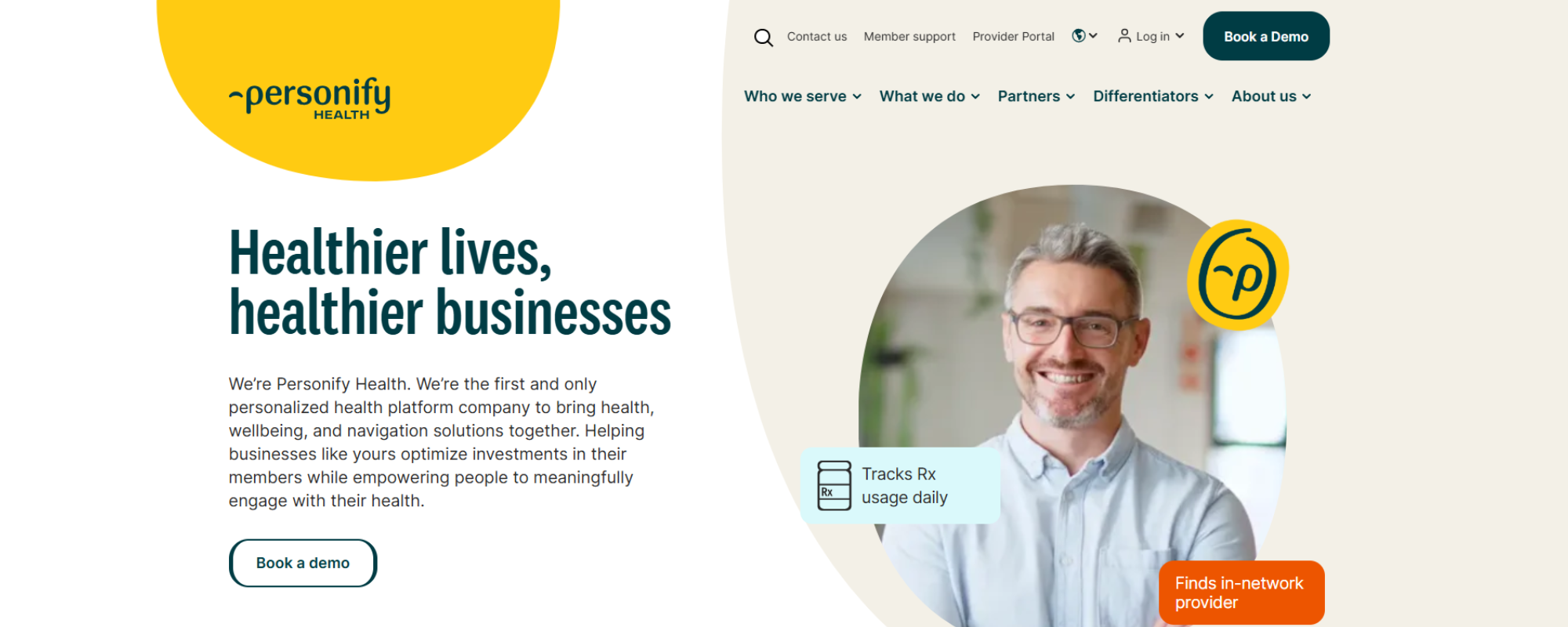
Personify Health connects multiple aspects of wellbeing into a single ecosystem, linking wellness programs with healthcare navigation and benefits management.
Its model is built on personalization, using data and clinical insights to support healthier habits and sustained progress.
The platform blends human coaching with digital tools, creating a balance between guided support and self-directed experiences.
It is designed for scale, supporting organizations with large and distributed workforces across regions.
This makes it a reliable option for companies seeking a structured, all-in-one wellness solution.
#4
WellSteps
Wellness platform focused on behavior change, guided programs, and measurable health outcomes.
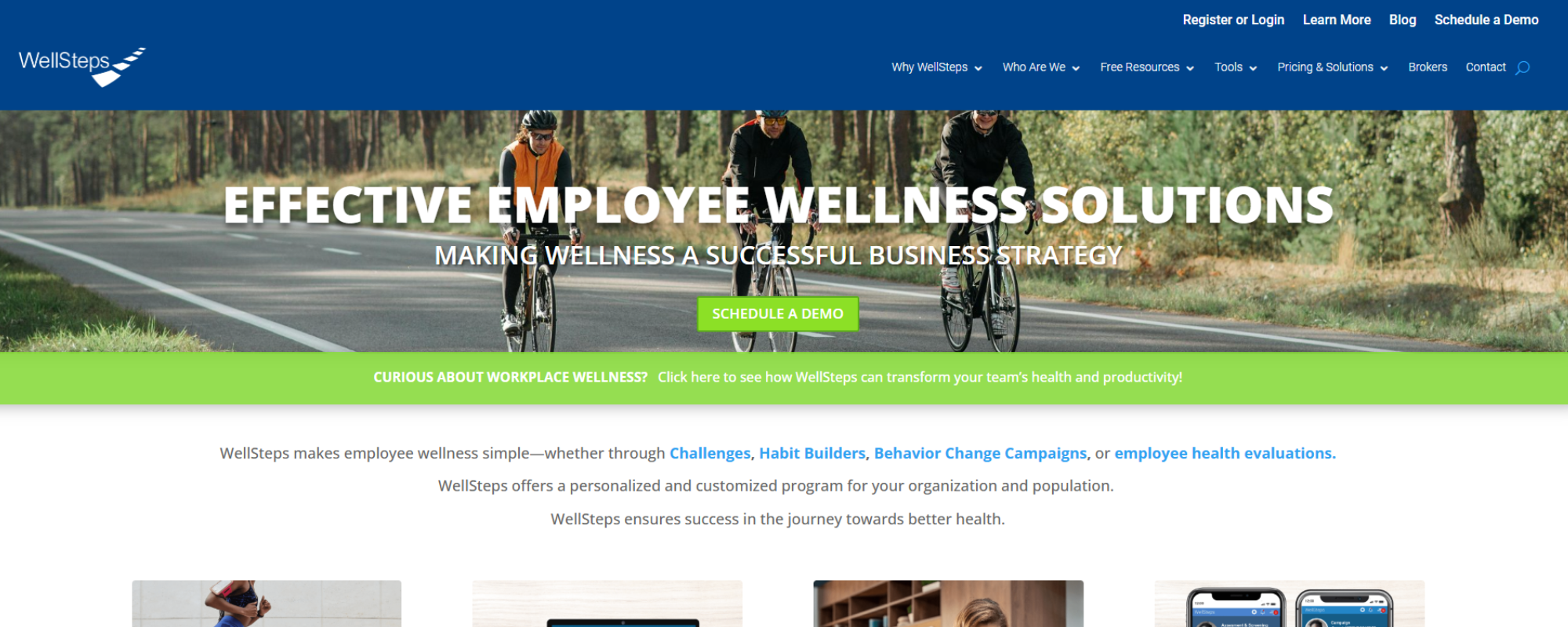
WellSteps is built around structured programs that help employees develop and maintain healthier habits over time.
Its approach is grounded in behavior change science, combining assessments, challenges, and incentives to drive continuous improvement.
The platform includes guided campaigns and health evaluations, allowing organizations to deliver a more structured wellness journey.
It also provides ongoing support through wellness specialists, making implementation simpler and more manageable.
This makes it a practical choice for organizations looking for a clear, results-oriented approach to wellness.
In Summary
Which of the Best Wellness Platforms for Employers is the right fit for your organization?
The answer depends on how you plan to support employee wellbeing and which outcomes matter most to your business.
Some solutions are designed to maximize engagement, while others focus on structure, scalability, or long-term behavior change.
Defining these priorities makes it easier to evaluate options without adding unnecessary complexity.
A well-aligned decision can lead to stronger participation, healthier teams, and more sustainable results.
If you’re interested in similar insights, explore our blog for more content on workplace trends, platforms, and strategies.
FAQs
1. What are wellness platforms for employers?
Wellness platforms for employers are digital solutions that help companies manage employee health programs.
They typically include activities, tracking, incentives, and analytics to improve participation and outcomes.
2. How do wellness platforms improve employee engagement?
They increase engagement by using personalization, incentives, and interactive experiences.
Features like challenges, rewards, and progress tracking help keep employees consistently involved.
3. What features should employers look for?
Key features include program customization, data tracking, integrations, and reporting tools.
Strong platforms also offer engagement tools and scalable program management.
4. Are wellness platforms suitable for all company sizes?
Yes, most platforms are designed to support small teams and large organizations.
The main difference is how much customization and scalability each solution provides.
5. Why is employee wellness important for organizations?
Employee wellness impacts productivity, retention, and overall workplace satisfaction.
Healthier employees are more engaged, which can lead to better long-term business performance.