
Searching for “what is AI Readiness”?
Every organization is talking about AI, but not many are truly ready for it. AI readiness refers to an organization’s strategic, technical, and cultural preparedness to adopt artificial intelligence and create real value.
It takes more than just budget or ambition.
It shows whether the basics are in place: data, infrastructure, governance, people, and processes.
Only 14% of companies worldwide say they are fully confident in their AI projects.
AI readiness aims to close the gap between what organizations want to do and what they can actually achieve.
So, What Is AI Readiness?
AI readiness is about how prepared an organization is to adopt, use, and benefit from AI in areas like strategy, data, governance, infrastructure, and culture. It covers much more than just having AI tools or a budget for them.
This difference is important because organizations that use AI without the right foundations often face the same issues.
These include poor results from bad data, resistance from employees, unclear goals, regulatory risks, and projects that never move past the testing stage.
AI readiness helps prevent these problems before they start. It asks what must be in place for AI to truly work in our organization.
Why Is AI Readiness Important?
AI is no longer just a trend; it’s needed for staying competitive.
Early adopters are pulling ahead, while others risk falling behind.
With 95% of the workforce using AI and new regulations like the EU AI Act in place, organizations need to make AI readiness a top priority, not just a technical detail.
Without a solid foundation, companies face wasted resources, unreliable results, and serious legal or operational risks that could undermine their market position.
The 3 Pillars of AI Readiness
AI readiness depends on three connected pillars.
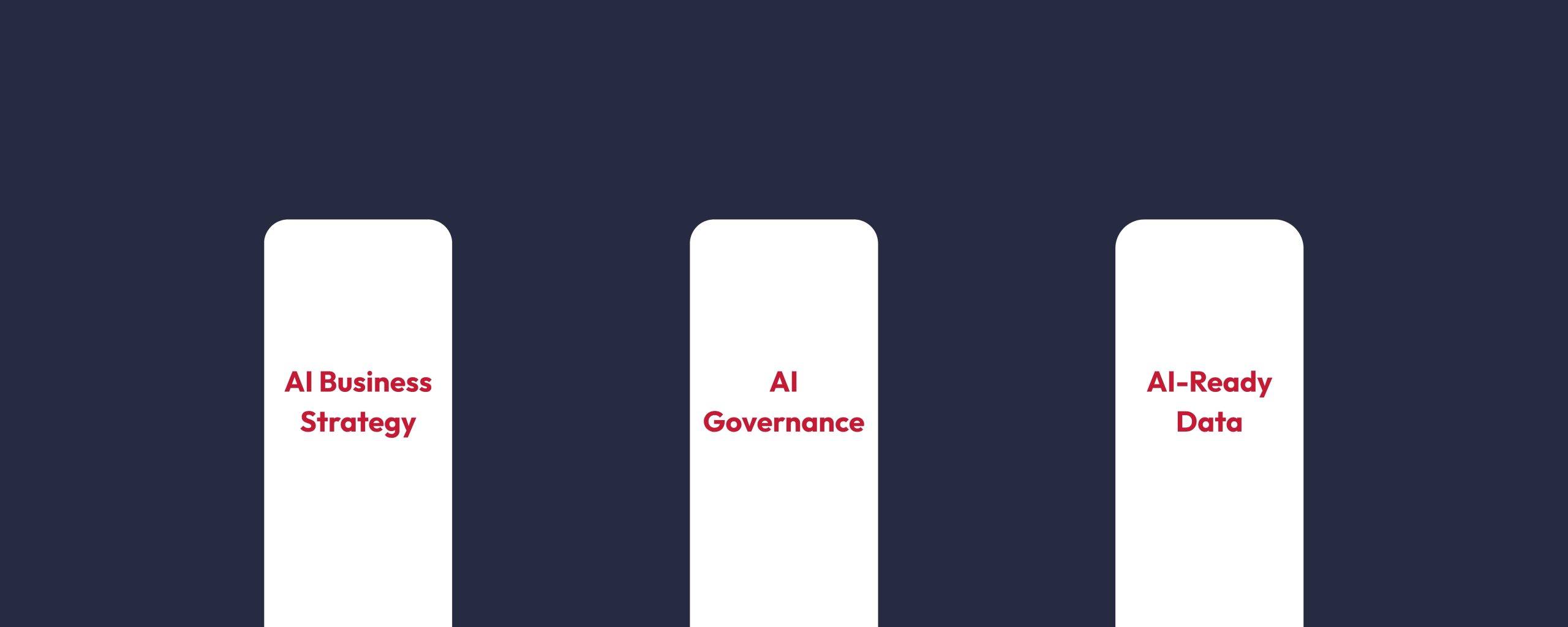
1. AI Business Strategy
If there is no buy-in from the organization, support from executives, or clear goals, AI projects often end up as isolated experiments that do not create lasting value.
This pillar includes building AI literacy, which means helping everyone understand what AI can and cannot do, and encouraging changes in both how the organization works and how people think.
A good AI business strategy also involves figuring out which problems are truly a good fit for AI and which are not.
Microsoft’s AI Business Strategy

An AI business strategy helps companies deliver real value. Without it, many end up just experimenting and see little to no results.
Microsoft shows this by adding AI to its main products, such as Copilot in Office tools. So each AI project supports both revenue and user benefits.
Starting with support from company leaders and then spreading across the entire organization.
Now on, instead of asking “where can we use AI?”, go for “which business problems are truly worth solving with AI?”
2. AI Governance
AI governance sets the rules for how AI systems are designed, used, and monitored.
Many people think governance slows down AI adoption and adds unnecessary rules.
But organizations that ignore this often struggle to explain how their models work to regulators or stakeholders, or only find problems like bias and errors after they have already caused issues.
IBM’s and AI Governance

Some people believe AI governance slows innovation, but it actually helps AI develop in a responsible way.
IBM, for example, puts governance at the center of its AI strategy.
The company focuses on explainability, bias detection, and ethical guidelines to build trust with clients and regulators.
Without these safeguards, companies might use AI models that they cannot fully explain or control.
This can lead to reputational and legal issues, as seen with Airbnb, which had to address algorithmic bias after it affected users.
3. AI-Ready Data
This is often the deciding factor for whether AI projects succeed or fail.
No matter how advanced the model or how well the business strategy fits, if the AI uses bad data, it will give bad results.
AI-ready data is not just high quality and complete; it must also be “fit for purpose,” meaning it suits the specific model and use case.
Creating a solid data setup for machine learning is one of the most important investments a company can make before starting AI projects.
This means selecting the right storage and processing systems, setting up reliable ETL pipelines, adding data labeling for supervised learning, and ensuring bias detection is built into the data processing from the start, not added later.
Here, data engineering is a prime focus, as they have often found that data infrastructure is the main barrier to deriving value from AI.
Netflix, Uber, and Data Priority

AI projects need a strong data foundation to succeed, so having AI-ready data is one of the most important steps.
Netflix and Uber demonstrate this by investing heavily in data systems, from real-time data pipelines to well-organized datasets for specific needs.
For example, Netflix’s recommendation engine relies on detailed data about what people watch.
Uber’s pricing and routing depend on the current location and demand information.
As you can see, in both cases, AI performs well not only because of advanced models but also because the data is high-quality and up to date.
How to Assess Your Organization’s AI Readiness
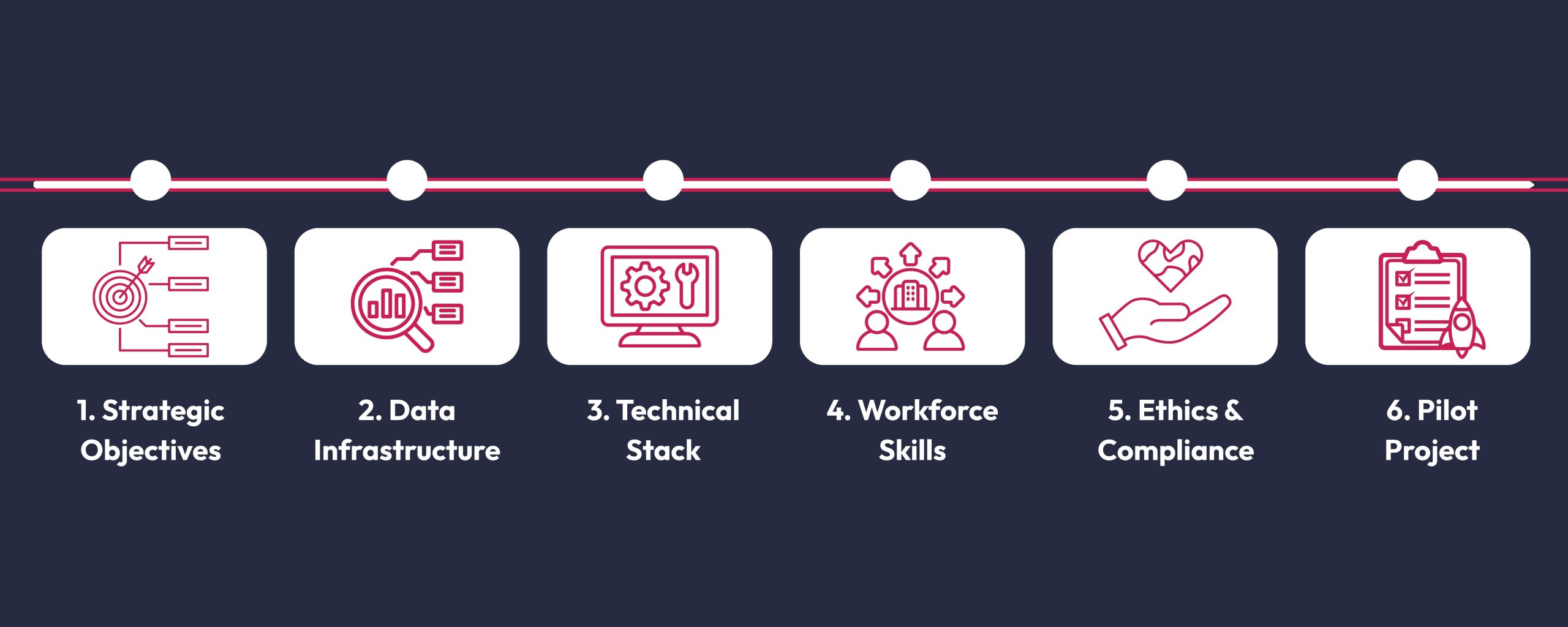
Before starting with AI, it helps to use a structured readiness assessment. This lets organizations see how prepared they are in each area and spot any gaps they need to fix before moving ahead.
| Pillar | Critical Actions | Strategic Goal |
|---|---|---|
| 1. Strategic Objectives | Define specific problems (efficiency or personalization) before selecting technology. | Ensure AI delivers actual business value rather than just technical success. |
| 2. Data Infrastructure | Audit data quality, accuracy, and pipeline reliability; check storage scalability. | Establish a “ready” data foundation necessary for training reliable models. |
| 3. Technical Stack | Evaluate hardware/cloud resources for low-latency inference and future scaling. | Avoid the need to rebuild systems when moving from pilot to production. |
| 4. Workforce Skills | Identify gaps in AI engineering, domain expertise, and ethical awareness. | Build a cross-functional team capable of sustaining long-term AI delivery. |
| 5. Ethics & Compliance | Review regulatory frameworks (EU AI Act, GDPR) and design compliance in from the start. | Mitigate legal exposure and ensure trust in high-stakes industries. |
| 6. Pilot Project | Run a scoped technical exploration to identify runtime gaps and adoption barriers. | Generate evidence for a confident “go/no-go” decision on full-scale deployment. |
For example, an e-commerce company that wants to improve personalization could begin by setting a clear goal, like increasing customer retention.
Next, it would check its data for accuracy and consistency and upgrade its systems to handle real-time recommendations.
The company would also look for any gaps in AI skills and bring together a team from different departments.
From the start, it would make sure to follow regulations such as GDPR.
Finally, they would run a small pilot project to test the results before expanding, ensuring the effort delivers real business value, not just technical improvements.
In Summary
So, what is AI readiness?
AI readiness is how prepared an organization is to adopt, use, and benefit from AI in its strategy, data, infrastructure, governance, and culture.
Being ready for AI is not a one-time goal. It’s a skill that organizations need to keep building over time.
When organizations build this foundation before starting AI projects, they can avoid costly mistakes and get more value from AI in the long run.